Tips on how to be a Good Artist
Being an artist includes continuously evolving your skills, improving your technique and pushing yourself beyond the next boundary. It's part of your growth as an artist and can even see you changing your artistic techniques completely several times during a lifetime. Becoming a better artist is a journey and will bring greater satisfaction to you as you continue to build on what you already know.
Step 1
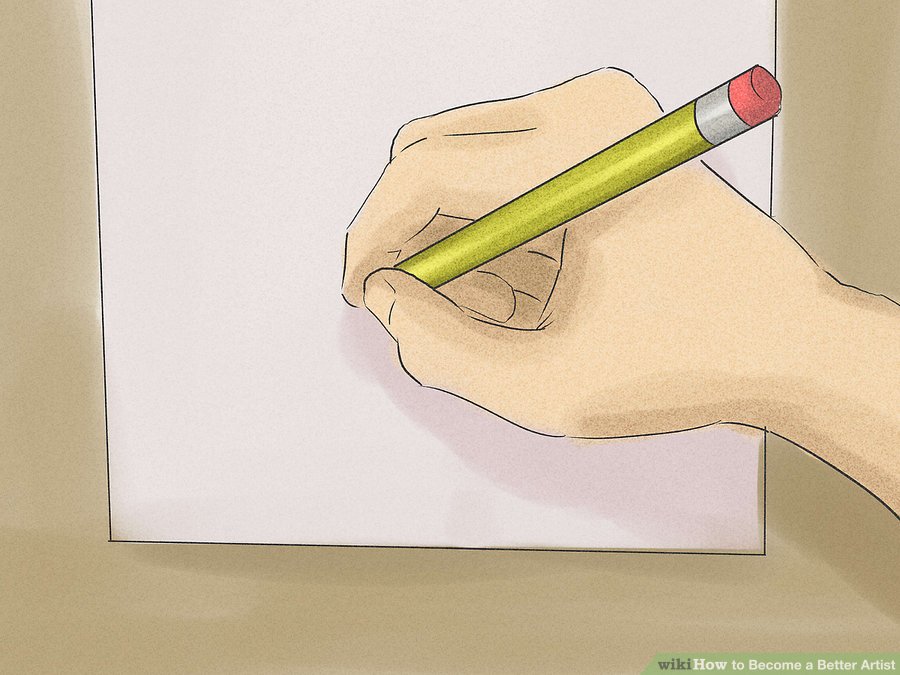
Buy all of the necessary supplies. Drawing pencils, erasers, sketchbook, pastels, paint, an easel... whatever you think you will need for your area of expertise. New supplies and mediums can be encouraging. Try beginner sets of artist grade supplies, because they are often easier to use than the cheaper, student grade supplies. Begin with an inexpensive sketchbook with lots of pages, and a sketching set that includes kneaded putty eraser and different grades of graphite pencils. It may also include charcoal pencils, charcoal sticks, graphite sticks and brown, gray, or reddish sketching sticks. All these tools are useful, and the supplies are cheaper in bundled sets than bought individually. "H" and 2H, 4H, etc are "hard" pencils that sharpen to a fine point, and give a very light mark, easily covered by paint or inking. They're for design. "F" is a "fine" pencil, a little harder than an HB, which is a normal No. 2 pencil, and middle hardness. "B" means black, and each successive degree of B pencil is softer, blacker, and smudgier. 2B is a good sketch pencil, 4B is a great one that gives good shading, and 6B or higher is almost like using charcoal, for ease of smudging and shading.
Step 2
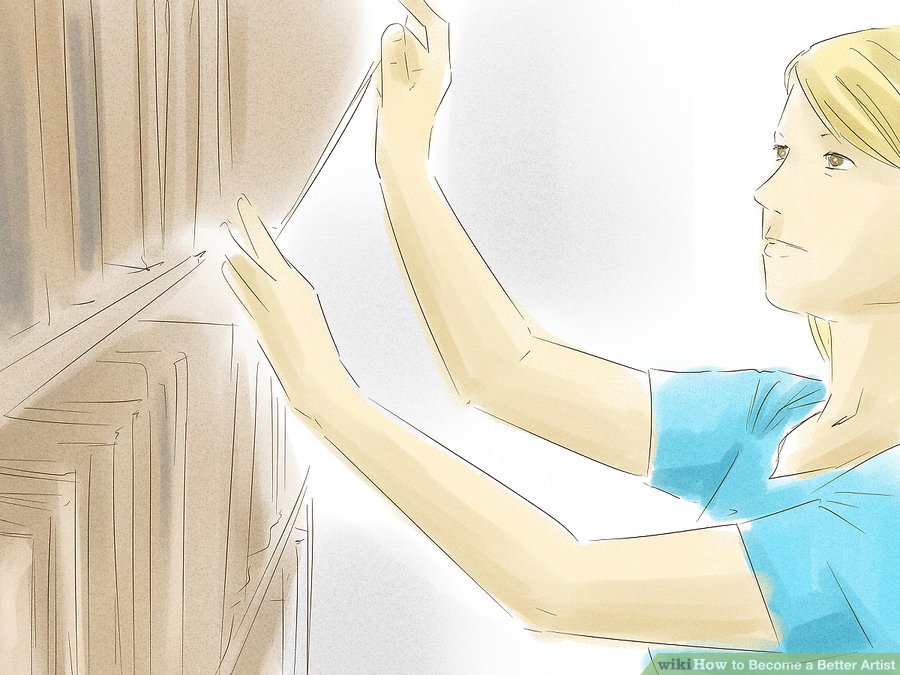
Purchase some how-to drawing books. This includes books on specific subjects, like how to draw animals, how to draw horses, how to draw seascapes, etc. Whatever you like most or get interested in. Try to accomplish at least one drawing a day. You can even frame them and put them up on your walls, to inspire you to keep going through the next day. You can also check out drawing books from your local library, and find out which one inspires you the most before buying it. Work through each of the exercises in turn, rather than trying to do everything in the book at once.
Step 3
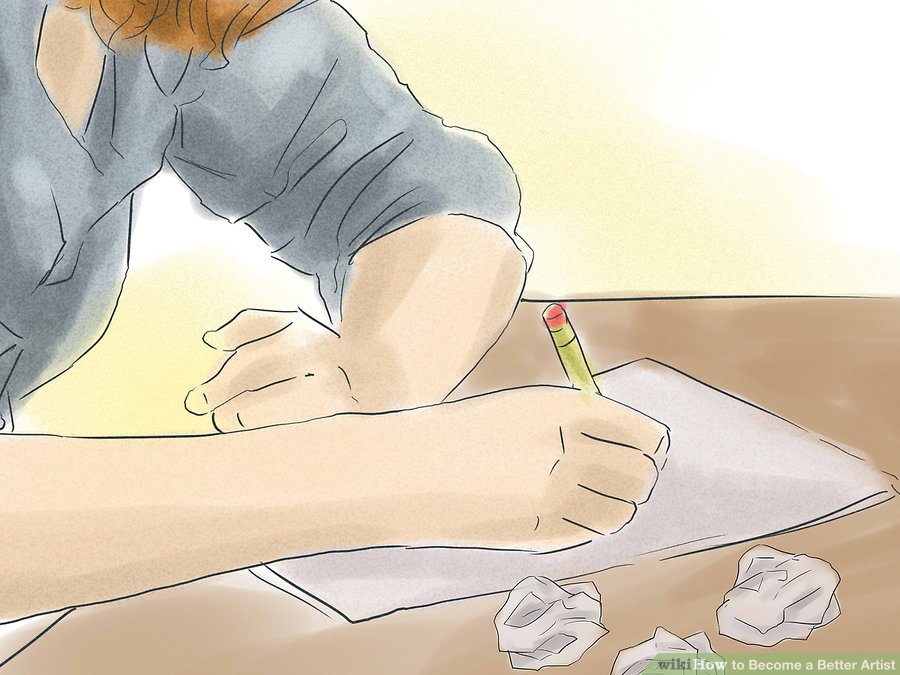
Date your daily sketches. They don't need to be complex or difficult - a five minute "gesture sketch" is as useful for learning to draw as a half hour spent doing a detailed drawing. If you have a half hour, spending it on half a dozen shorter sketches will actually give better practice. Try to get it right, but don't worry about perfection. You'll achieve good, recognizable drawings by constant practice more than anything else.
Step 4
Learn composition and design. Look for books on design and composition, take classes in design, study it as much as you do how to draw things accurately. It makes the difference between whether you create great art or just copies of photos. Learn how to crop reference photos, choose which subjects to shoot or sketch in a landscape, guide a viewer's attention in the painting to the most important thing in it - a portrait's eyes, the sunlit patch in a landscape that you chose as a focal point, the animal bending to drink, the people on the beach. Some subjects are attention-getters by themselves, like a cute kitten, but you can improve on that cute kitten picture to the point it's irresistible, if you learn good design principles and give just the right balance of background space around it.
Hope it helps!