Fernando Amorsolo
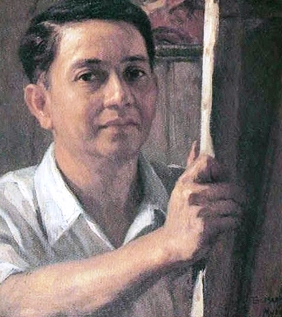
Amorsolo was born in May 30, 1892 in Paco, Manila. Don Fabián de la Rosa, his mother's cousin was also a Filipino painter. At the age of 13, Amorsolo became an apprentice to De la Rosa, who would eventually become the advocate and guide to Amorsolo's painting career. During this time, Amorsolo's mother embroidered to earn money, while Amorsolo helped by selling water color postcards to a local bookstore for ten centavos each. Amorsolo's brother, Pablo Amorsolo, was also a painter. Amorsolo's first success as a young painter came in 1908, when his painting Leyendo el periódico took second place at the Bazar Escolta, a contest organized by the Asociacion Internacional de Artistas. Between 1909 and 1914, Amorsolo enrolled at the Art School of the Liceo de Manila.
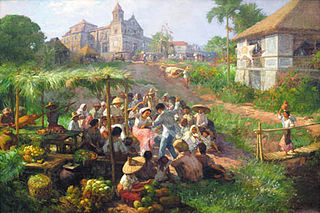
Antipolo by Fernando Amorsolo, depicting Filipinos celebrating a town fiesta.
After graduating from the Liceo, he entered the University of the Philippines' School of Fine Arts, where De la Rosa worked at the time. During college, Fernando Amorsolo's primary influences were the Spanish people court painter Diego Velázquez, John Singer Sargent, Anders Zorn, Claude Monet, Pierre-Auguste Renoir, but mostly his contemporary Spanish masters Joaquín Sorolla Bastida and Ignacio Zuloaga. Amorsolo's most notable wora student at the Liceo was his painting of a young man and a young woman in a garden, which won him the first prize in the art school exhibition during his graduation year.To make money during school, Amorsolo joined competitions and did illustrations for various Philippine publications, including Severino Reyes’ first novel in Tagalog language, Parusa ng Diyos ("Punishment of God"), Iñigo Ed. Regalado's Madaling Araw ("Dawn"), as well as illustrations for editions of the Pasion. Amorsolo graduated with medals from the University of the Philippines in 1914.
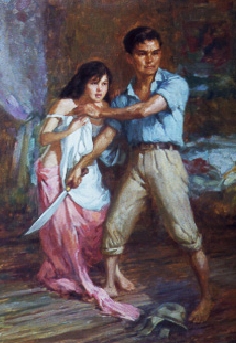
Detail from Fernando Amorsolo's 1945 Defence of a Filipina Woman's Honour, which is representative of Amorsolo's World War II-era paintings. Here, a Filipino man defends a woman, who is either his wife or daughter, from being raped by an unseen Japanese soldier. Note the Japanese military cap at the man's foot
After the onset of World War II, Amorsolo's typical pastoral scenes were replaced by the depictions of a war-torn nation. During the Japanese occupation of the Philippines during World War II, Amorsolo spent his days at his home near the Japanese garrison, where he sketched war scenes from the house's windows or rooftop. During the war, he documented the destruction of many landmarks in Manila and the pain, tragedy and death experienced by Filipino people, with his subjects including "women mourning their dead husbands, files of people with pushcarts and makeshift bags leaving a dark burning city tinged with red from fire and blood." Amorsolo frequently portrayed the lives and suffering of Filipina women during World War II. Other World War II-era paintings by Amorsolo include a portrait in absentia of General Douglas MacArthur as well as self-portraits and paintings of Japanese occupation soldiers. In 1948, Amorsolo's wartime paintings were exhibited at the Malacañang Presidential Palace.